


Industrial equipment reliability, service lifespan, and assembly matching accuracy directly determine the overall operational quality of finished machinery. Many engineering buyers ignore hidden defects of ordinary casting components during procurement, leading to frequent equipment failures, high maintenance costs, and delayed production schedules. Choosing qualified aluminum alloy die casting components effectively avoids most downstream quality risks and stabilizes long-term mass production efficiency.
Irregular material density, uneven wall thickness, and internal tiny pores are common invisible faults in low-cost die casting products. These problems cannot be detected by simple appearance inspection, but will cause leakage, deformation, fracture and pressure resistance failure after long-term high-load operation. Professional customized die casting solutions from Meigu Precision Casting adopt standardized smelting, precision mold opening and multi-stage pressure casting processes to eliminate internal structural defects fundamentally.
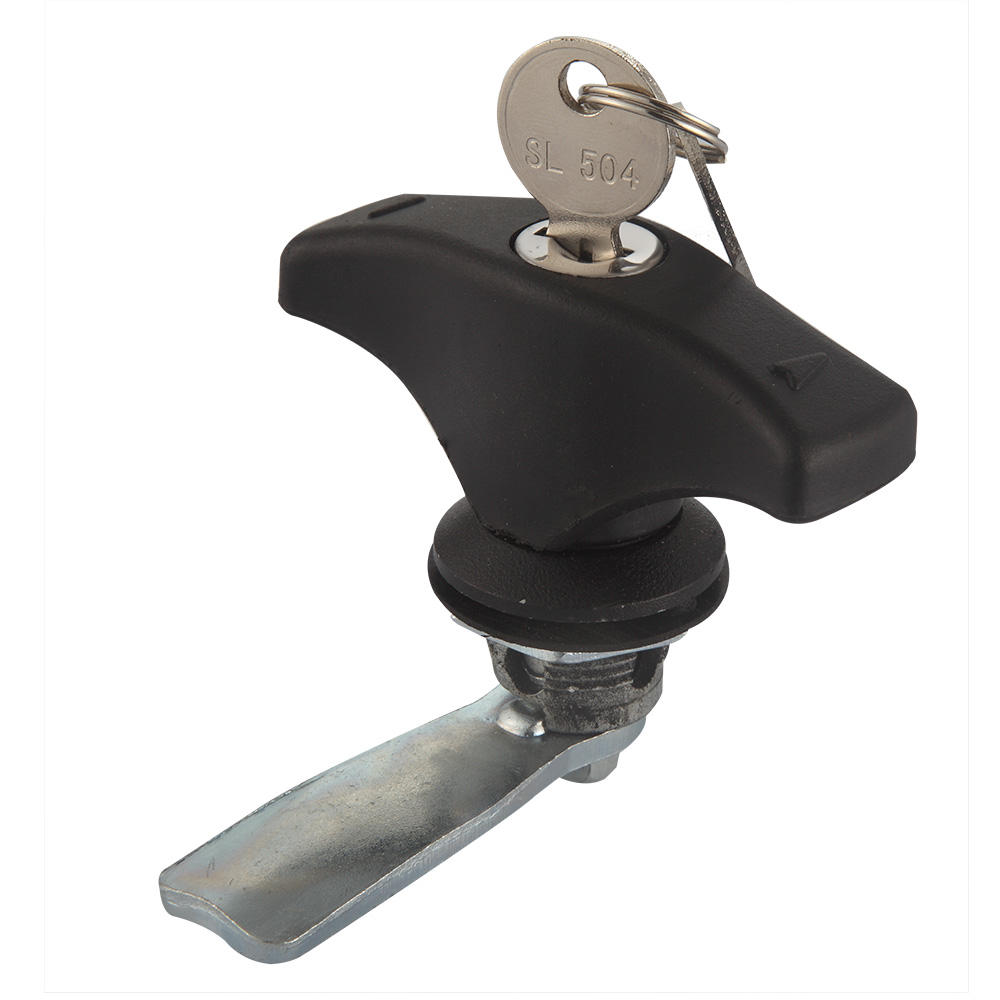
Most customers only focus on unit price when purchasing die casting parts, while overlook dimensional tolerance, surface flatness and post-processing compatibility. Unqualified dimensional deviation will cause tight assembly, loose fitting and inability to match standard accessories, greatly increasing manual trimming workload and assembly reject rate. Precision aluminum die casting strictly controls tolerance range within ultra-small standard intervals, adapting to automated assembly lines and high-precision mechanical matching requirements.
Corrosion resistance, lightweight performance and thermal conductivity are key performance indicators of automotive, communication, electrical and mechanical equipment accessories. Ordinary cast aluminum parts suffer rapid oxidation, surface peeling and heat dissipation degradation in humid, high-temperature and corrosive working environments. High-density die-cast aluminum alloy features excellent atmospheric corrosion resistance, low weight ratio and stable thermal conduction, perfectly adapting harsh outdoor and industrial continuous working conditions.
Mass production stability distinguishes excellent die casting suppliers from ordinary factories. Unstable batch quality leads to inconsistent size, inconsistent surface treatment effect and unstable mechanical strength among different batches of goods. Stable process control ensures identical parameters for every single part in bulk orders, reducing inspection costs, return losses and production interruption risks caused by mismatched component quality.
Common Pain Points & Performance Comparison of Aluminum Die Casting Products
| Problem Category | Low-Quality Ordinary Die Casting Parts | Premium Precision Aluminum Alloy Die Casting Parts |
|---|---|---|
| Internal Structure | Hidden pores, loose structure, easy to crack under pressure | Compact dense structure, high structural strength, shock and pressure resistant |
| Dimensional Accuracy | Large tolerance deviation, difficult assembly matching | High-precision dimension control, seamless automatic assembly |
| Surface Quality | Rough surface, burrs remaining, poor painting adhesion | Smooth flat surface, less post-processing, stable electroplating & spraying effect |
| Service Life | Short service cycle, easy aging and deformation | Long durable service, stable performance in long-term continuous operation |
| Environmental Adaptability | Poor moisture resistance and corrosion resistance | Strong high & low temperature resistance, anti-oxidation and corrosion resistant |
Many downstream enterprises suffer repeated losses from secondary processing costs. Low-precision cast parts require extra polishing, deburring, drilling and calibration procedures, which extend production cycles and raise comprehensive processing expenses. Integrated precision die casting finishes near-net shape forming, greatly reducing subsequent machining procedures and saving overall production cost for customers.
Aging molds and backward casting technology also cause frequent quality fluctuations. Outdated equipment cannot maintain stable injection pressure and cooling speed, resulting in warpage, shrinkage cavities and insufficient material filling. Advanced intelligent die casting equipment cooperates with optimized mold design to produce highly consistent finished products, supporting large-scale customized batch orders with stable delivery quality.
Long-term cooperation procurement also faces hidden risks such as delayed delivery, insufficient supply capacity and non-compliant material composition. Unstandardized raw material ratio reduces overall mechanical properties of aluminum alloy parts, failing to meet national industrial safety standards. Formal precision casting enterprises conduct full material composition testing, strength testing and air tightness testing for all finished products, issuing complete quality inspection reports to guarantee product safety compliance.
In summary, selecting professional high-precision aluminum alloy die casting parts is not only a choice of accessories, but a layout for stable enterprise production, cost control and long-term equipment operation. Reasonable matching of material performance, dimensional accuracy and batch stability can fundamentally solve frequent faults, high maintenance costs and low production efficiency troubles that plague mechanical processing, automobile supporting, intelligent equipment and other industries. Stable qualified casting supplies continuously boost product competitiveness and reduce unnecessary operating losses for manufacturing enterprises.